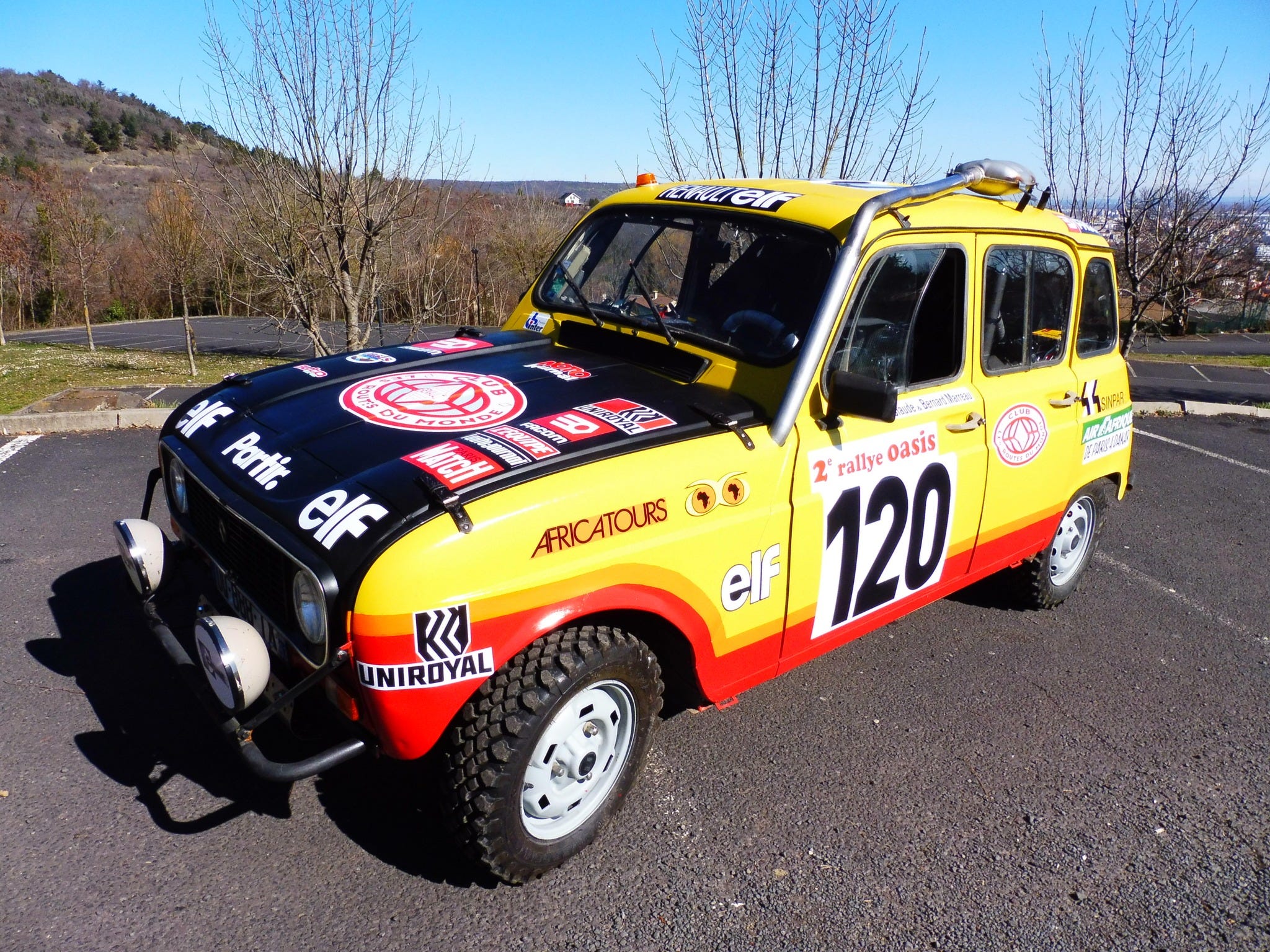
Renault 4 Sinpar Dakar 4x4
The Humble French Hatchback That Took on the World’s Toughest Rally

When people think of the Dakar Rally, images of brutal trucks, rally-raid buggies, and factory-backed 4×4s usually come to mind. Very few would expect to see a Renault 4—one of the simplest cars ever built—lined up for the start. Yet in the late 1970s and early 1980s, the Renault 4 Sinpar proved that ingenuity, lightness, and mechanical honesty could sometimes rival brute force.
This is not just a story about Renault, but about how a modest utility car—reworked by a small French specialist—became an unlikely Dakar competitor.
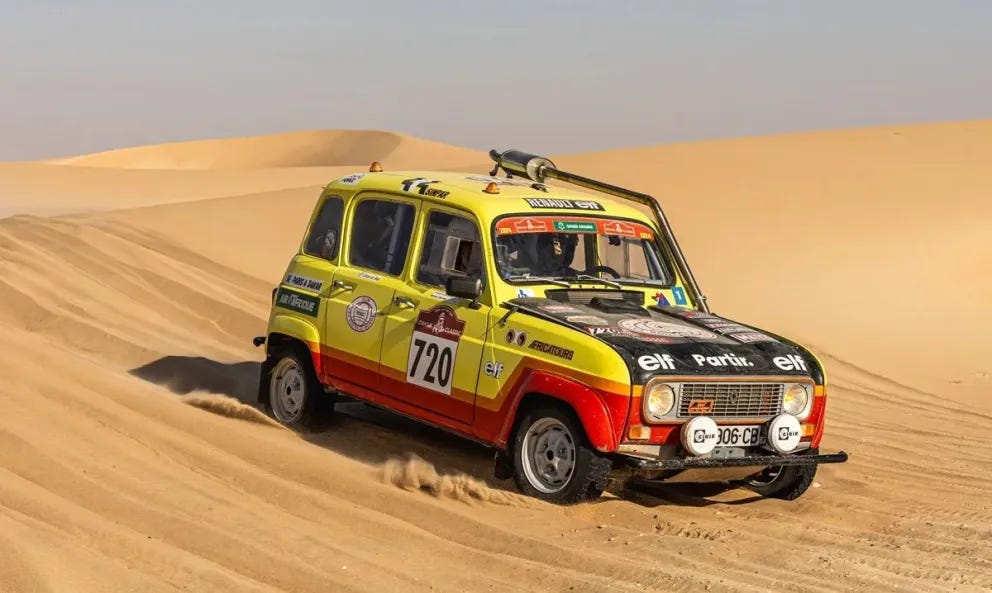
The Renault 4: From Rural France to Rally Raid
Launched in 1961, the Renault 4 was never intended for motorsport. It was designed as Front-wheel drive, lightweight and simple, easy to repair anywhere and capable on poor rural roads of France and Balkans. (Very preferred with local factory)
Ironically, these exact qualities later made it appealing for long-distance desert competition. The Renault 4’s long suspension travel, low weight, and basic mechanical layout meant it could survive where heavier, more complex vehicles struggled. But one major limitation remained: traction.
Sinpar: The Key to Dakar Ambitions
The breakthrough came from Sinpar (Société Industrielle de Production et d’Adaptation Rhodanienne), a French engineering firm specializing in four-wheel-drive conversions.
What Sinpar Did
Added a driven rear axle to the Renault 4. Retained the front-engine layout . Installed a transfer system to power all four wheels. Reinforced suspension mounting points. Increased ground clearance. The result: Renault 4 Sinpar 4×4—still simple, still light, but now capable of crossing sand, mud, and rock.


Why the Renault 4 Sinpar Entered Dakar
The early Dakar Rally (late 1970s–early 1980s) was radically different from today:
Regulations were loose, privateers were welcome, reliability mattered more than outright speed and creativity often beat factory budget
For private teams and adventurous amateurs, the Renault 4 Sinpar offered:
Low cost, easy repairs in the desert, excellent fuel economy, surprising off-road agility and In a race where finishing was victory, the Renault 4 made sense.


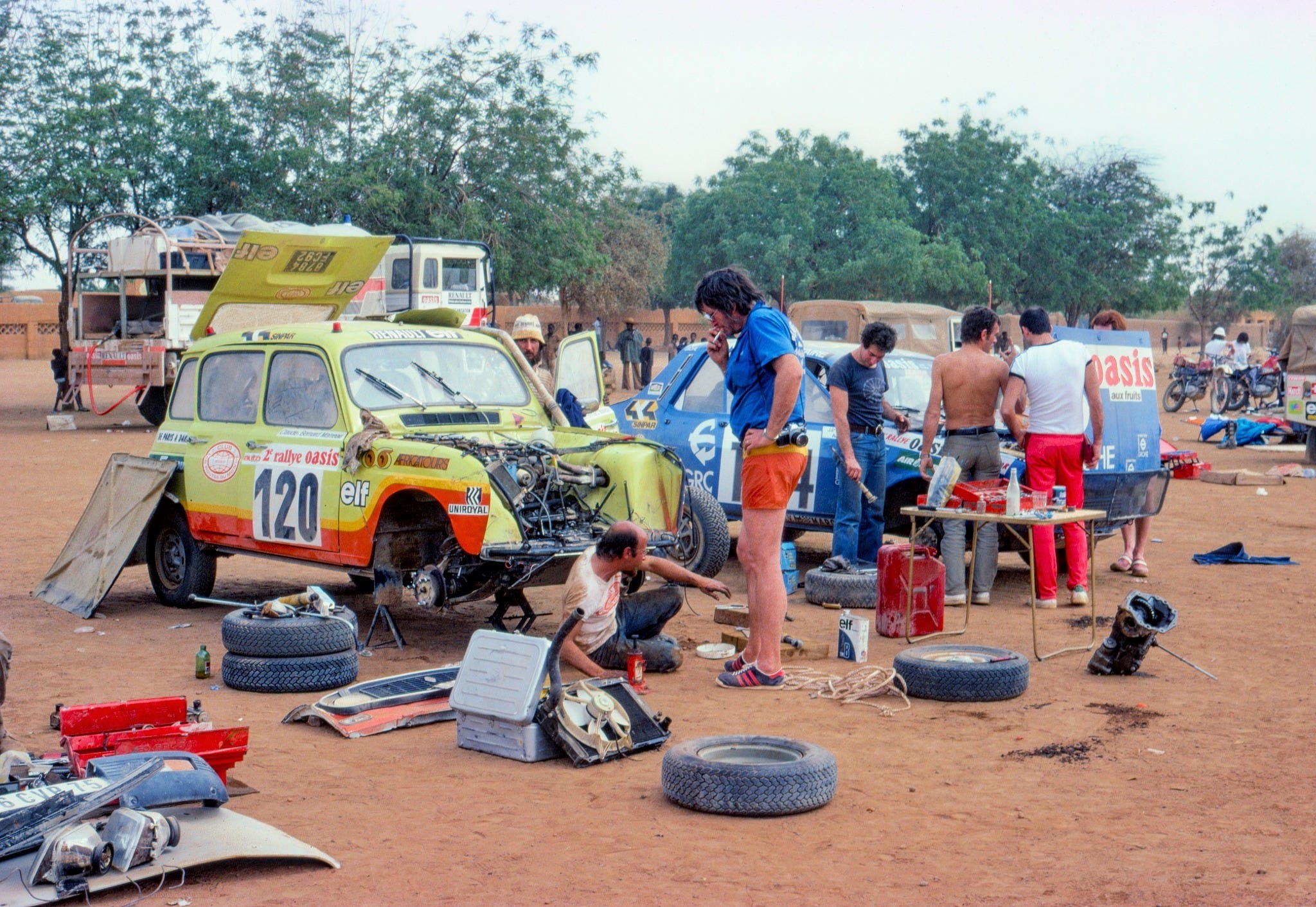
Dakar-Spec Renault 4 Sinpar: What Was Changed
Though it looked humble, Dakar-entered Renault 4 Sinpars were heavily adapted.
Chassis & Suspension
Reinforced subframes and weld points. Longer-travel suspension. Uprated springs and dampers. Skid plates under engine and gearbox
Drivetrain
Sinpar permanent or selectable 4×4. Modified gearing for low-speed control. Strengthened driveshafts
Engine
Mostly standard Renault 4 engines (845cc or 1108cc). Tuned for reliability, not power. Improved air filtration for desert dust
Body & Interior
Weight reduced where possible. Roll cage installed. Twin spare wheels. Extra fuel tanks. Simple rally navigation equipment
Power figures were modest—but the car’s power-to-weight ratio and traction allowed it to keep moving when heavier vehicles bogged down.


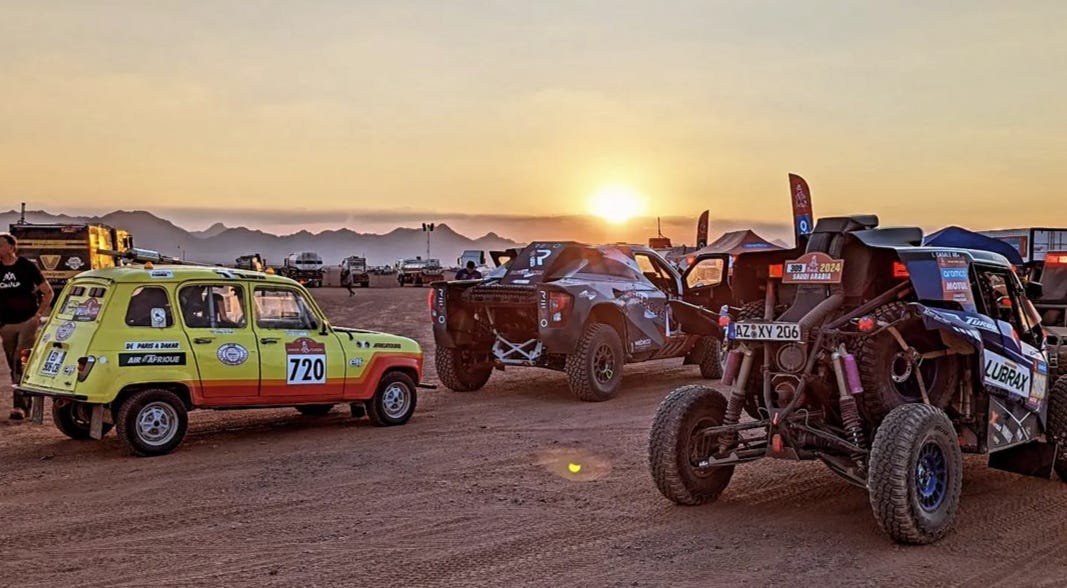
On the Dakar Trail: Performance & Reality
The Renault 4 Sinpar was never a podium contender. Its role in Dakar history is far more interesting such as It finished stages others couldn’t, It proved that simplicity mattered, It became a symbol of early Dakar’s spirit and It inspired later lightweight rally-raid builds
In soft sand and technical terrain, the Renault 4’s low mass gave it a real advantage. Crews often reported easier recovery when stuck, lower mechanical stress, better endurance over thousands of kilometers
Renault’s Quiet Encouragement
While not a full factory effort, Renault tolerated—and at times quietly supported—these entries supplying parts, providing technical advice and using Dakar appearances for brand storytelling. The Renault 4 Sinpar fit perfectly with Renault’s image of durability and accessibility, especially in developing markets.
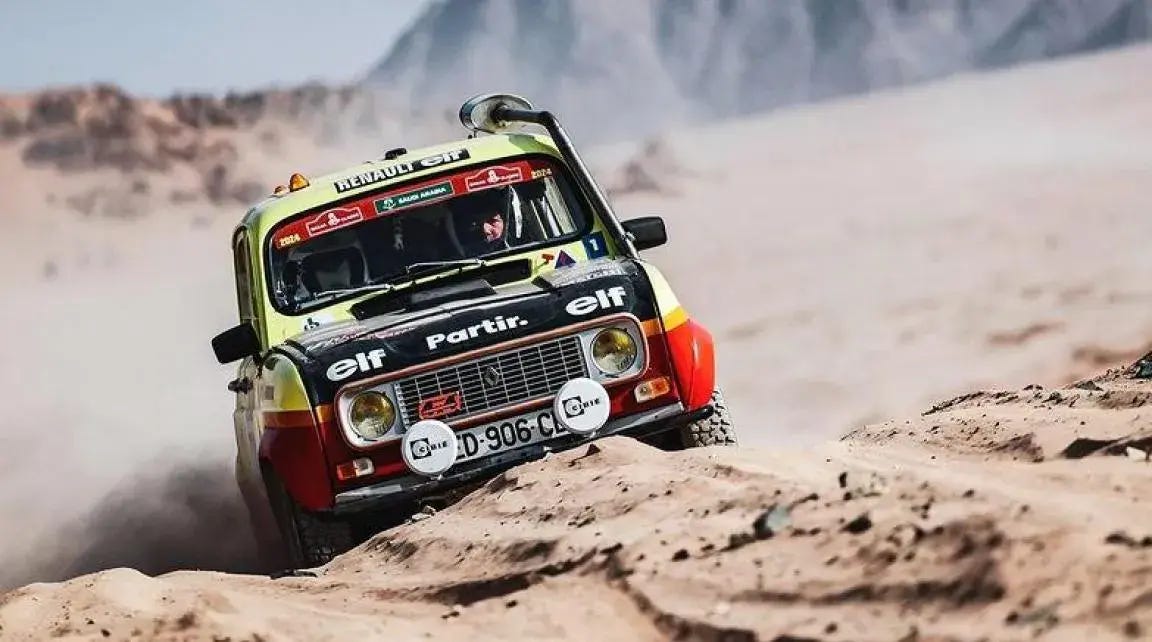
Legacy: A Cult Dakar Icon
Today, the Renault 4 Sinpar Dakar cars are highly sought after by collectors of Dakar history, by historic rally-raid enthusiasts and by museums focusing on early off-road motorsport.
They represent a time when Dakar was about adventure, not just horsepower, French engineering ingenuity at its best and proof that any car—if clever enough—can race the desert.
Conclusion
The Renault 4 Sinpar’s Dakar story is one of clever engineering over brute strength. It wasn’t fast. It wasn’t glamorous. But it was honest, resilient, and endlessly determined—qualities that defined the early Dakar Rally itself.
In an era dominated today by million-euro machines, the Renault 4 Sinpar stands as a reminder that Dakar was once a race where imagination mattered more than money.