Lancia Stratos HF
The Wedge That Conquered Rallying....

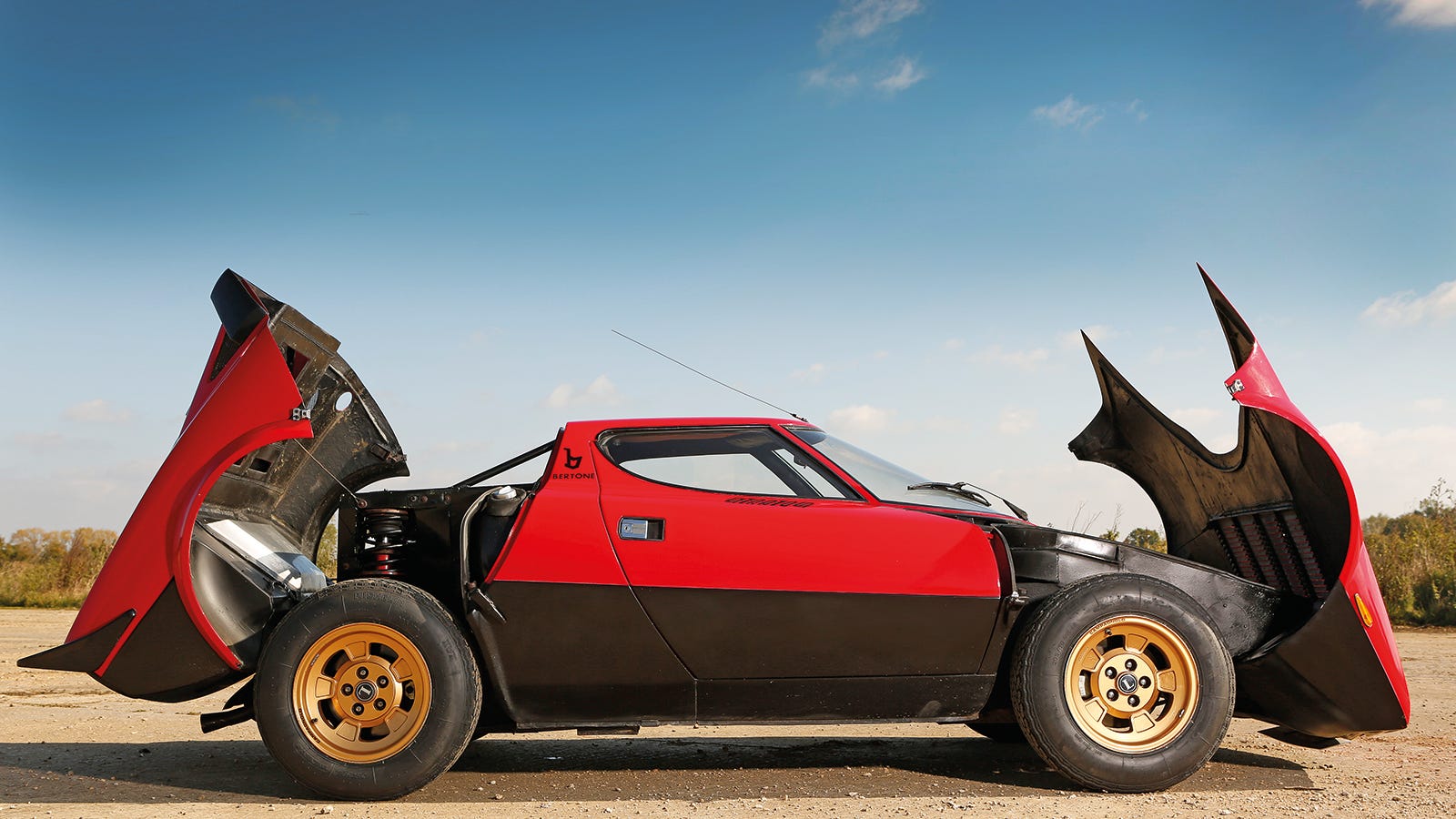
Few cars in motorsport history changed rallying as radically as the Lancia Stratos HF. Before the Stratos, most rally cars were adapted road cars. The Stratos was different. It was the first machine designed from the ground up purely to dominate world rally competition.
Low, brutal, noisy, unpredictable and spectacular, the Stratos became one of the defining shapes of the 1970s. Even today, its silhouette looks more like a spaceship than a production automobile.
A Rally Weapon Born in Italy
The Stratos emerged during a period when rallying was becoming increasingly professional. Lancia wanted a successor to the aging Fulvia HF, but instead of evolving a road car platform, the company decided to create something purpose-built.
The project began with legendary designer Marcello Gandini at Bertone. Gandini had already shocked the automotive world with radical wedge-shaped creations such as the Lamborghini Countach. The Stratos followed the same dramatic philosophy.


The result was outrageous:
Ultra-short wheelbase
Mid-engine layout
Extremely wide visibility wraparound windshield
Fiberglass body panels
Aggressive aerodynamic wedge design
Unlike traditional GT cars; Stratos existed for one purpose: Winning rallies.
Ferrari Power in a Tiny Monster
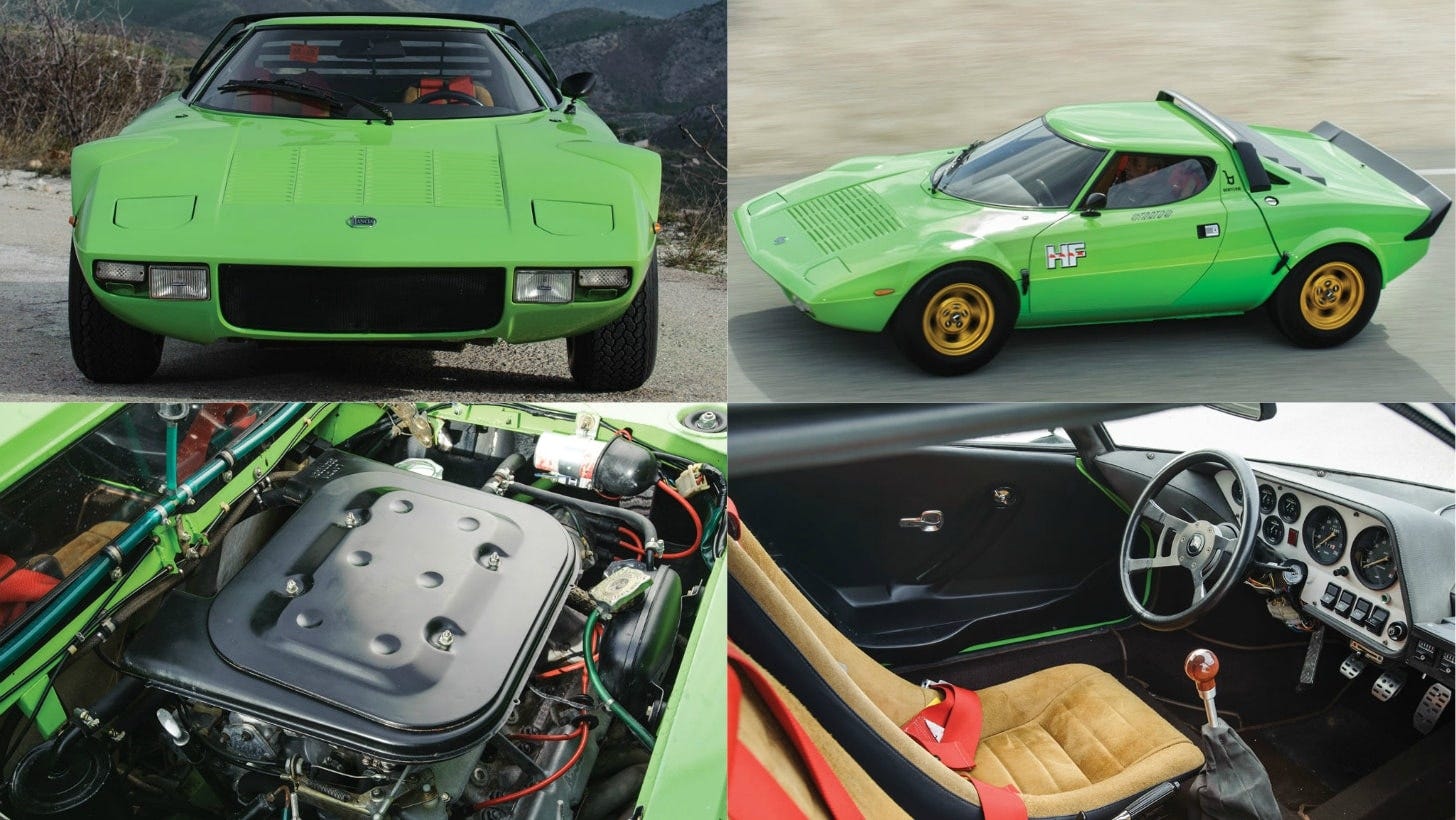
Perhaps the most fascinating part of the Stratos story was its engine.
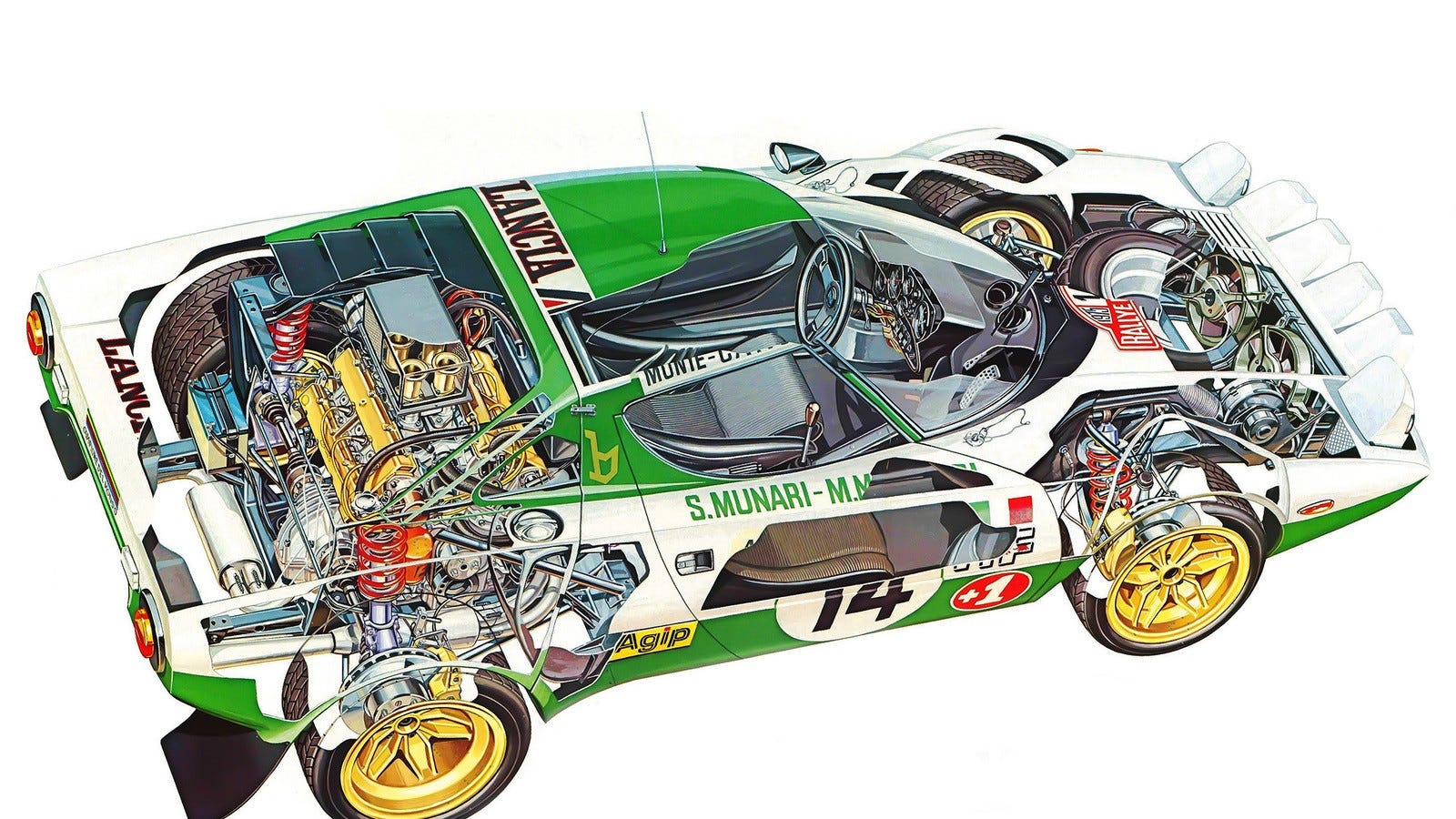
Under the rear clamshell sat a 2.4-liter Ferrari Dino V6 engine borrowed from the Ferrari Dino 246 GT. Convincing Enzo Ferrari to supply engines to Lancia was not easy because Ferrari traditionally disliked supporting outside manufacturers. But once the Dino production slowed, Ferrari agreed. The engine transformed the Stratos into a savage machine:
Around 190 hp in road trim
Over 300 hp in rally specification
Explosive throttle response
Incredible soundtrack
Massive torque delivery on loose surfaces
Combined with a curb weight below 1,000 kg, the Stratos became terrifyingly fast on dirt, snow, tarmac and mountain stages.
The Rally Dominance
The Stratos did not merely participate in rallying. It dominated it.
World Rally Championship Titles
The Stratos won 1974, 1975 and 1976 World Rally Championship. Three consecutive manufacturers’ titles cemented its legend forever. It became especially famous for its performances in Monte Carlo Rally, Tour de Corse, Rallye Sanremo, RAC Rally and Safari Rally.
Its short wheelbase made it twitchy and difficult, but in the hands of experts it was devastatingly effective.
Legendary Drivers
The Stratos attracted some of rallying’s greatest heroes.
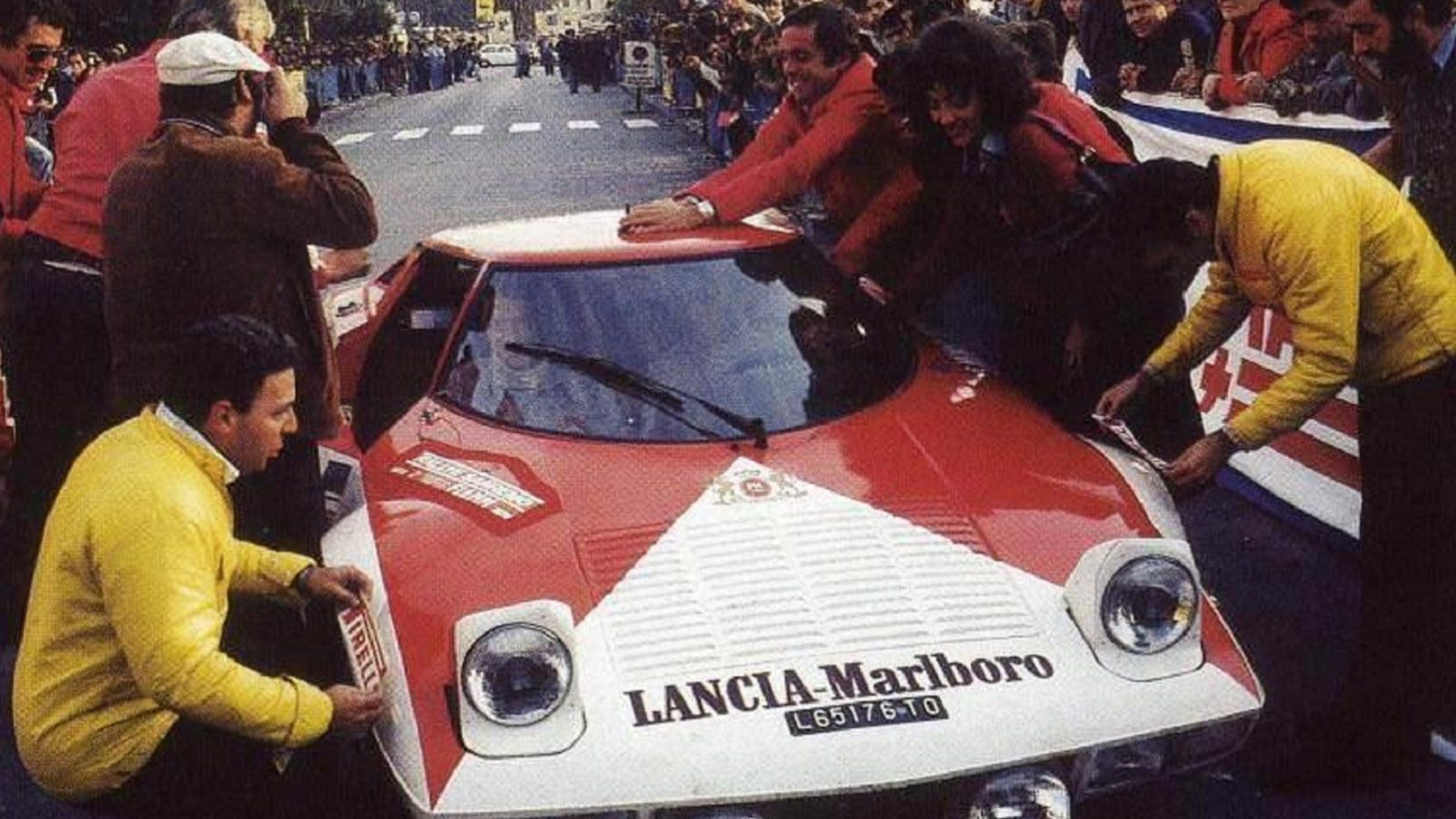
Sandro Munari: The man most associated with the Stratos. Munari became a Monte Carlo master and one of Lancia’s biggest icons.
Björn Waldegård: The Swedish driver extracted incredible speed from the difficult chassis.
Bernard Darniche: A Tour de Corse specialist who delivered unforgettable victories with the Stratos on twisting tarmac stages.
Markku Alén: Known for his aggressive style, Alén helped continue the Stratos myth into the late 1970s.


The ‘Beast of Corse’
One rally above all became synonymous with the Stratos: the Tour de Corse.
The narrow mountain roads of Corsica perfectly suited the car’s agility. The Stratos won the event multiple times and became feared for its speed through endless asphalt hairpins.
Spectators described the Ferrari V6 echoing through the cliffs like a Formula 1 car trapped inside a canyon.
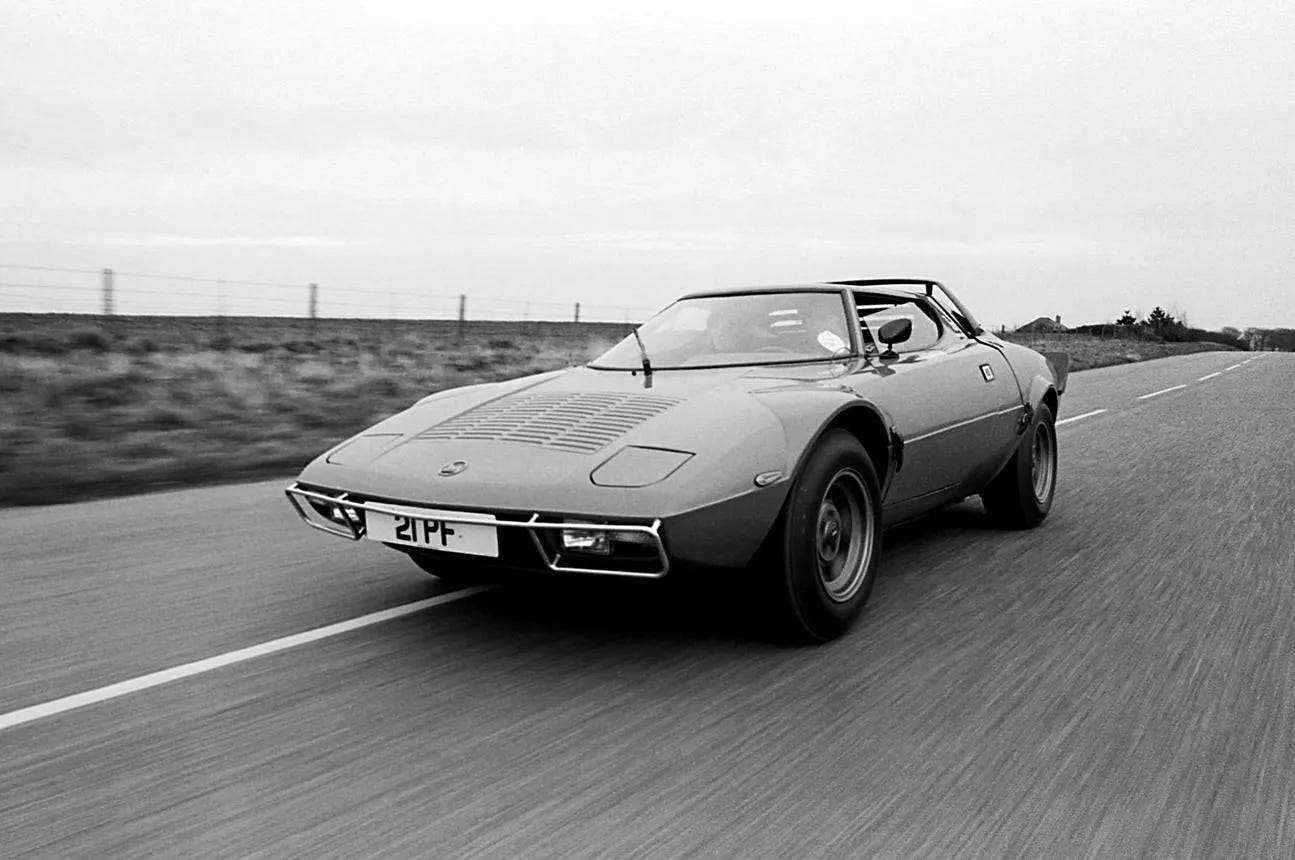
A Car That Was Difficult to Drive
Despite its success, Stratos was not an easy machine. Drivers often complained about:
Nervous high-speed handling
Sudden snap oversteer
Very short wheelbase instability
Heavy steering
Claustrophobic cabin
But that danger became part of its mythology. The Stratos rewarded bravery. It was a car that demanded commitment every second.
Homologation and Road Cars
To satisfy rally regulations, Lancia produced around 492 road-going examples. The street version looked almost identical to the rally car with Minimal luggage space, Tiny cockpit, Exotic engine, Loud cabin and Extreme visibility.
This blurred the line between race car and road car far more than most homologation specials of the era. Today, original Stratos road cars are among the most valuable and collectible rally legends in existence.
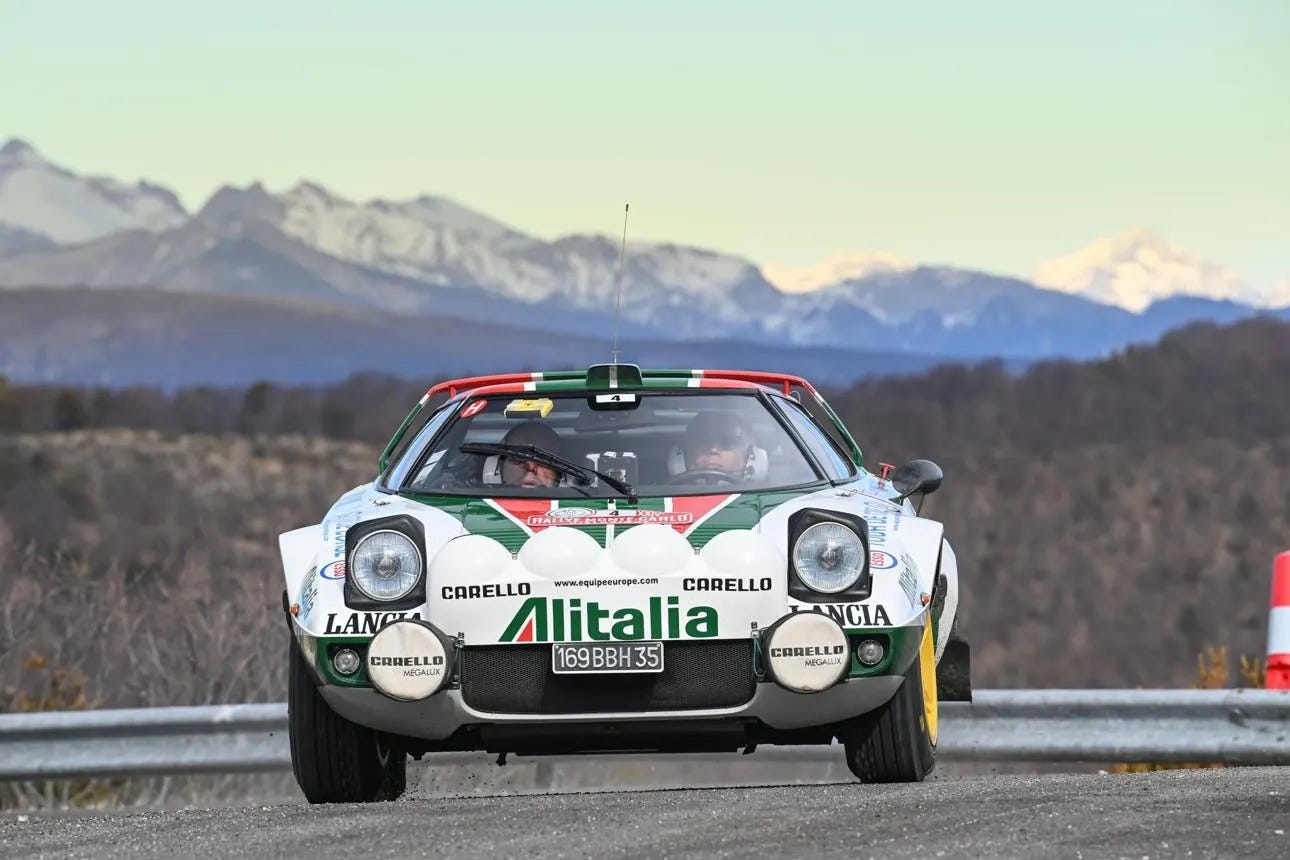
Alitalia: One of Motorsport’s Greatest Liveries
The iconic white, green and red Alitalia sponsorship colors became inseparable from the Stratos image. It remains one of the most recognizable liveries in motorsport history alongside:
Martini Racing Porsche colors
Gulf Oil blue/orange
Rothmans rally liveries
Marlboro McLaren Formula 1 cars
The Alitalia Stratos perfectly captured the visual drama of 1970s rallying.
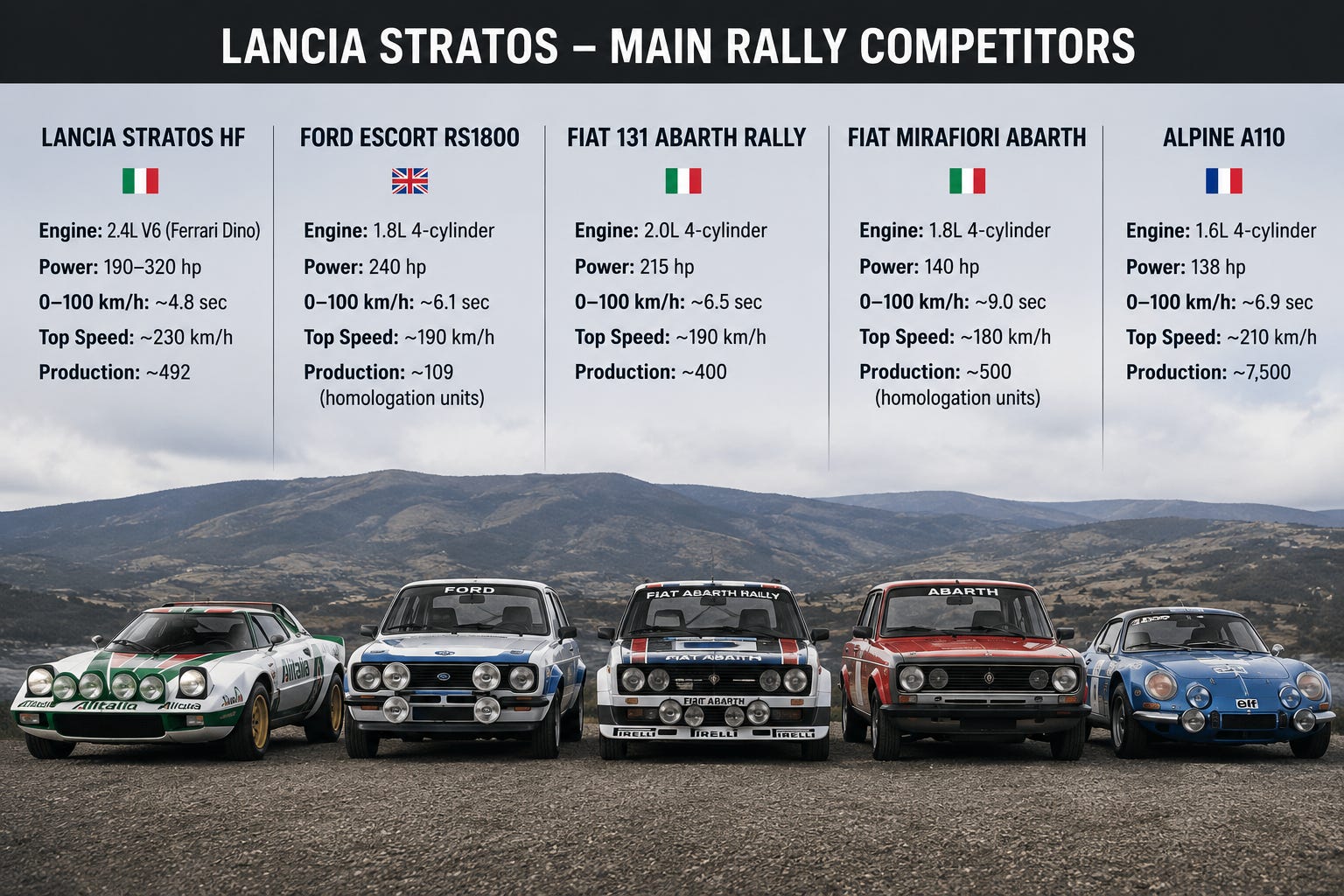
Competitor Analysis
Stratos stood apart because it was purpose-built. Rivals like the Escort or Fiat 131 evolved from production sedans while Stratos was a street-legal prototype racer.
Safari Rally Madness
One of the most dramatic chapters in Stratos history came during the brutal African rallies. At events like the Safari Rally it’s suspension travel was increased, additional lighting fitted, air filtration upgraded and body reinforcements added.
The End of an Era
By the late 1970s, corporate politics inside the Fiat Group began shifting focus toward the Fiat 131 Abarth Rally. The Stratos gradually lost factory backing despite still being competitive. Even after official retirement, private teams continued winning rallies with the car well into the early 1980s.
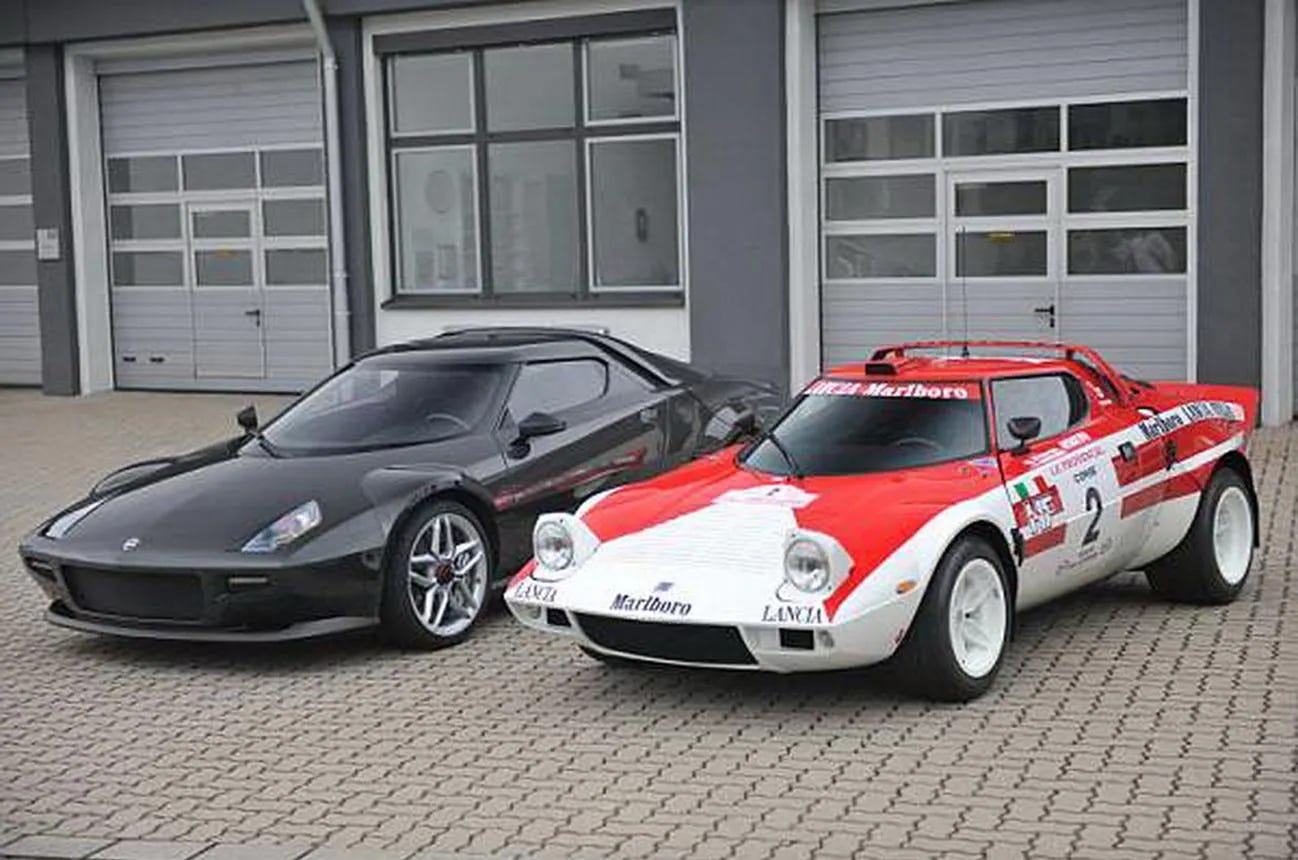
Legacy
The Stratos permanently changed rally car design. It inspired future purpose-built rally monsters such as Audi Sport quattro S1, Peugeot 205 T16 and Lancia Delta S4. Without the Stratos, the entire Group B era may have evolved very differently. Today, it remains:
One of the most visually dramatic rally cars ever made
One of the greatest homologation specials in history
A symbol of fearless 1970s motorsport engineering
The definitive rally icon of Lancia
The Stratos was never a rational automobile. It was a weapon built purely for speed, noise and victory — and rallying has never quite looked the same since.