Lamborghini Countach
The Wedge That Made Supercars Look Like Spaceships

Few cars have ever changed the emotional temperature of the road like the Lamborghini Countach. Before it, supercars could be beautiful, fast, elegant, even outrageous. After it, a supercar had to look like it had landed from another planet.
The Countach was not simply the successor to the Miura. It was a complete philosophical reset. Where the Miura was sensual and flowing, the Countach was architectural. It was a razor, a doorstop, a concept car that somehow escaped into production. It took the late-1960s dream of the mid-engined exotic and sharpened it into the visual language of the 1970s and 1980s.
Lamborghini showed the yellow Countach LP500 prototype at the 1971 Geneva Motor Show. Internally, the project was known as LP112, with “LP” standing for Longitudinale Posteriore, referring to the rear longitudinal positioning of the V12 engine. Paolo Stanzani led the engineering, while Marcello Gandini at Bertone created the shape including ‘scissor doors’, inseparable Countach V12 identity.
The Shock of the LP500 Prototype
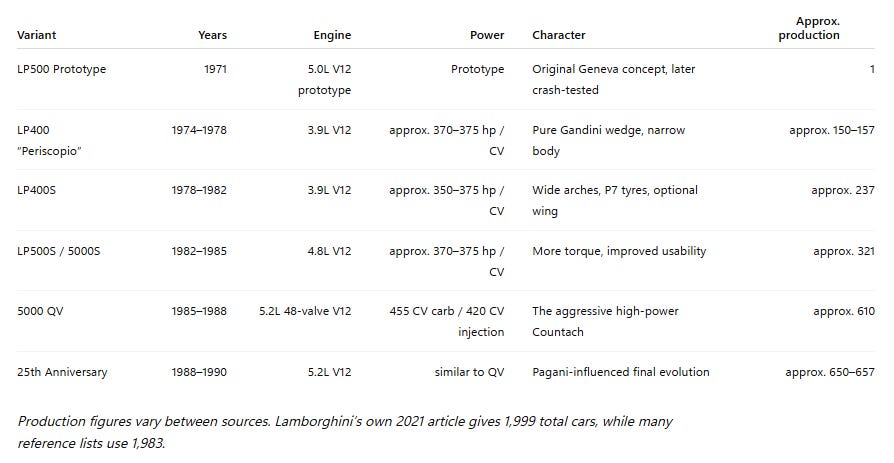
The original 1971 Countach LP500 was more than a styling exercise. It was a manifesto. The nose was impossibly low, the windscreen was steeply raked, the cabin sat far forward, and the rear looked like a mechanical furnace. The car had a 4,971 cc V12 in prototype form, a platform-style chassis, shark-gill intakes, and advanced electronic instrumentation. Lamborghini later used the prototype for crash testing, and it was scrapped in early 1974.
That single lost prototype became one of the most mythologised cars in Lamborghini history. Its sacrifice also helped create the production Countach — a car that would remain in production from 1974 to 1990 and define a generation of bedroom posters.


LP400 “Periscopio”: The Pure Countach
The first production version was the Countach LP400, often nicknamed Periscopio because of the roof-channel rear-view arrangement on early cars. It arrived in production form in 1974 with a 4.0-litre V12. Lamborghini’s own history notes that the LP400 followed the 1971 concept into production, while the later LP400S kept the 4.0-litre V12 but gained the visual aggression that associates with the model.
The LP400 is today considered by many collectors to be the purest Countach. It had no giant wing, no swollen wheelarches, no side skirts, and no exaggerated 1980s theatricality. It was the clean Gandini wedge: narrow tyres, simple surfaces, and a shape that still looked like a concept car.
Walter Wolf and the Birth of the Wide-Body Countach
The Countach’s transformation from elegant wedge into poster monster owes much to Walter Wolf, the Canadian businessman and Formula 1 team owner. Wolf wanted more drama, more grip, and more power. His modified Countach received wider wheels, flared arches, spoilers, and a more aggressive attitude.
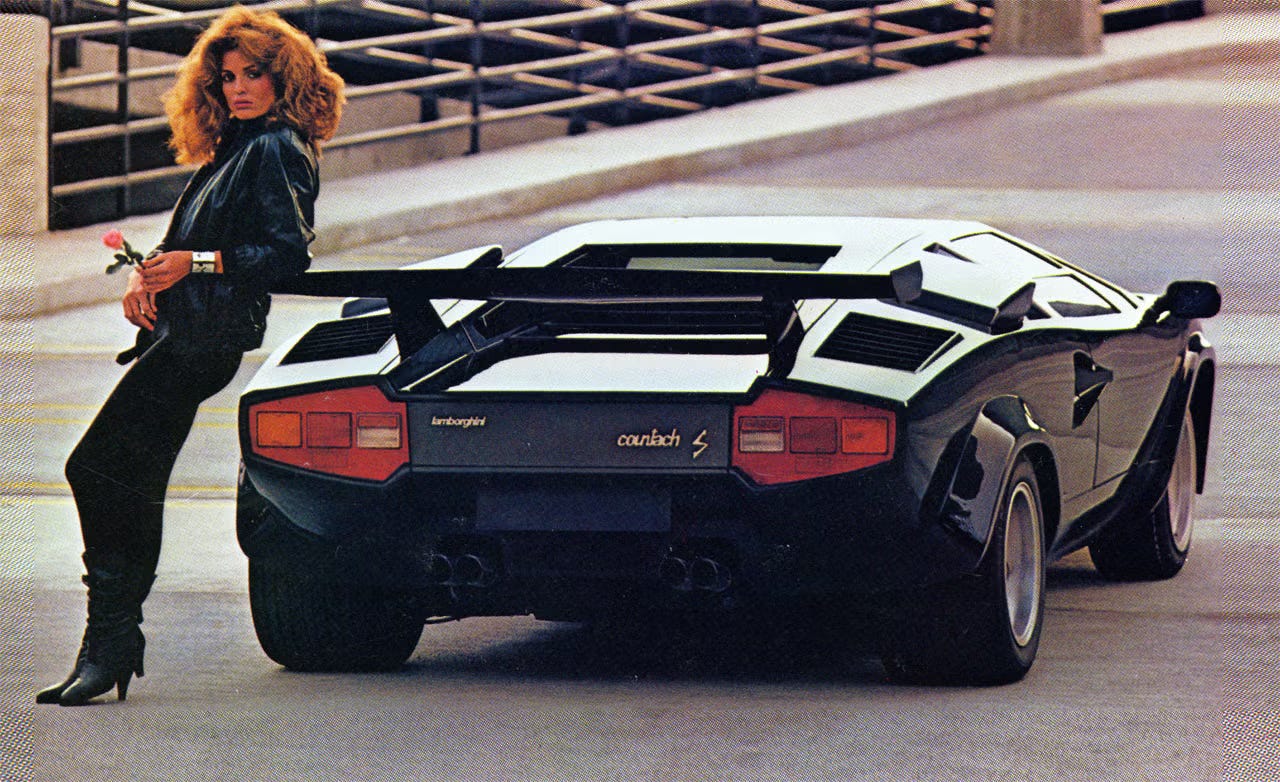
That look heavily influenced the LP400S, launched in 1978. Suddenly the Countach had become wider, lower, angrier. The Pirelli P7 tyres, extended wheelarches, deep front spoiler, and optional rear wing gave the car the visual identity. Ironically, the famous rear wing was never really about maximum speed. It added drama and stability, but it could reduce top speed. Owners rarely cared.


LP500S —> 5000 QV: Countach becomes monster
In 1982 Lamborghini introduced the Countach 5000S, also known as the LP500S in some markets. The engine grew to 4.8 litres, bringing more torque and drivability without dramatically changing the car’s appearance. It was still brutal, still cramped, still dramatic, but now better suited to the torque-hungry expectations of 1980s buyers.
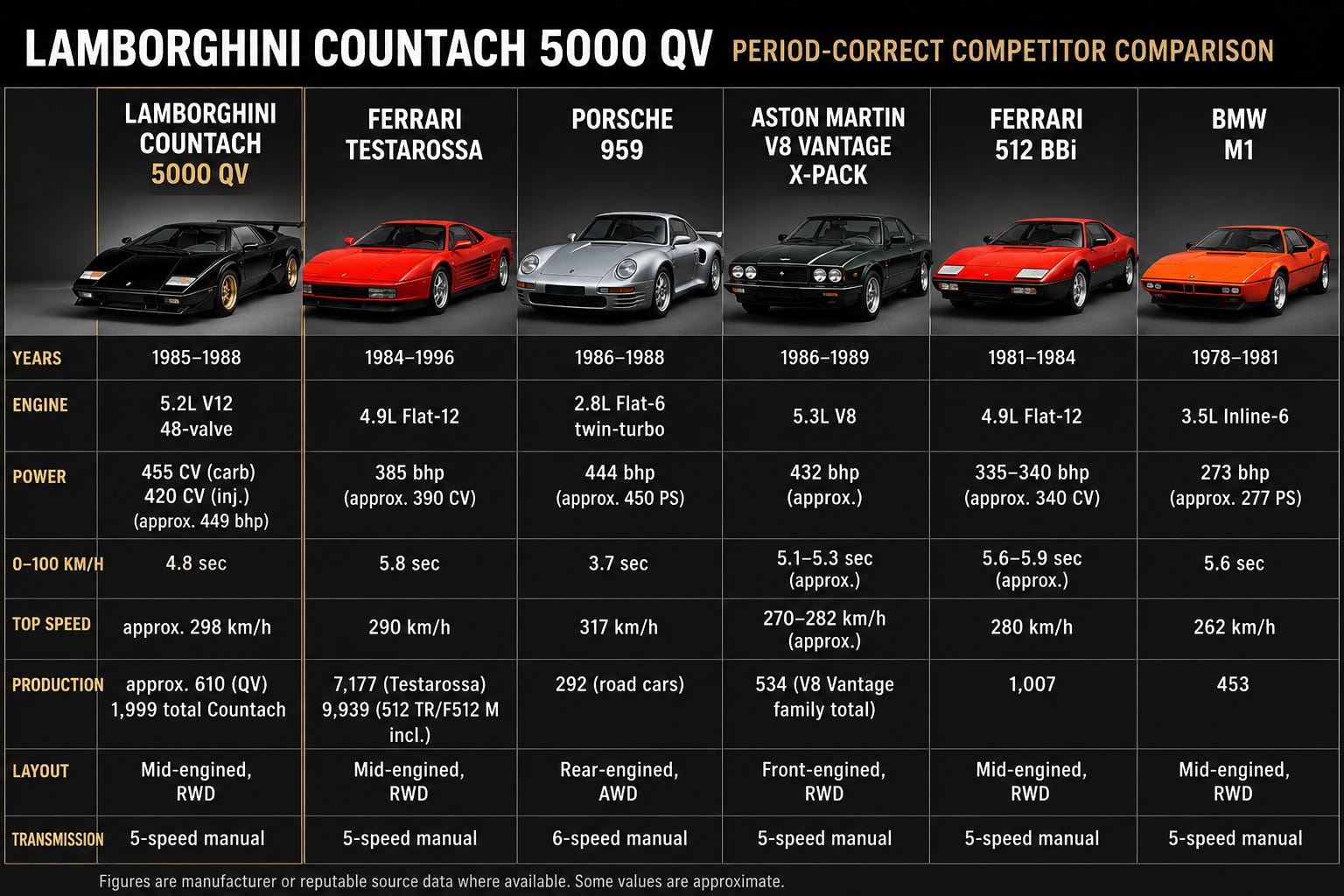
Then came the big one: the Countach 5000 Quattrovalvole, launched in 1985. The V12 grew to 5.2 litres and adopted four valves per cylinder. Lamborghini quoted 455 CV for the carburetted version and 420 CV for the injection version. The new engine cover bulge, needed because of the downdraft carburettor layout, made rear visibility almost comically bad — but it also made the car look even more outrageous.
RM Sotheby’s describes the 5000 QV as one of 610 examples produced, with a 5.2-litre V12 producing around 449 hp and a 0–100 km/h time of 4.8 seconds. This was the Countach at full volume: wide tyres, deep arches, V12 howl, absurd stance, and a shape that made every Ferrari beside it look almost restrained.
25th Anniversary: Final & the Prime Countach
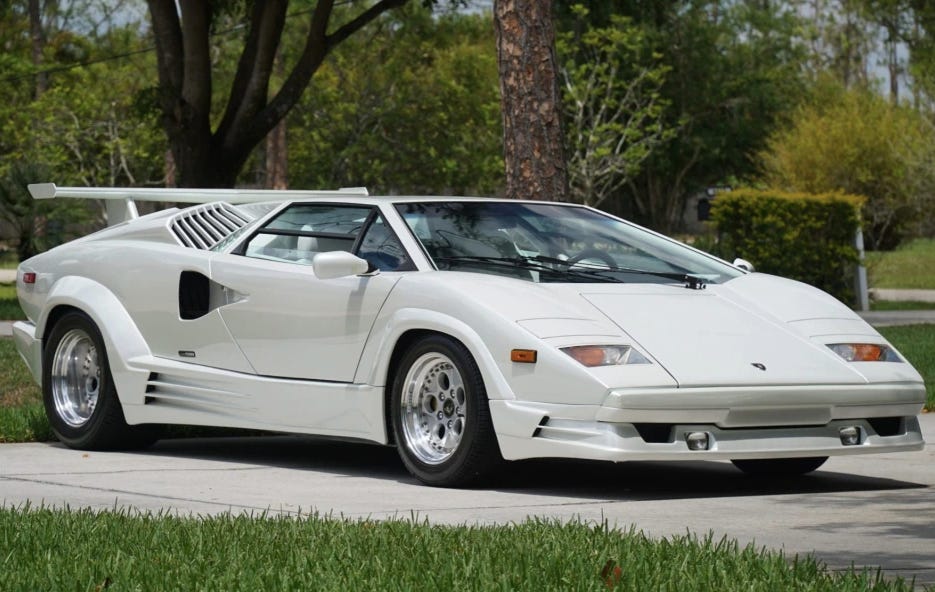
For Lamborghini’s 25th anniversary, the Countach received its final major evolution. The 25th Anniversary Edition, introduced in 1988, was mechanically close to the 5000 QV but heavily restyled. The cooling ducts, side skirts, bumpers, and rear intakes were revised, with input from young Horacio Pagani, who later created Pagani Automobili.
Purists often prefer the LP400 or 5000 QV, but the Anniversary is the most developed road-going Countach. It is also one of the most recognisable, especially in white, red, or black with the full wing-and-side-skirt treatment. By 1990, the Countach finally gave way to the Diablo. ,999 Countachs produced from 1974 to 1990.
Engineering: Beautifully Irrational
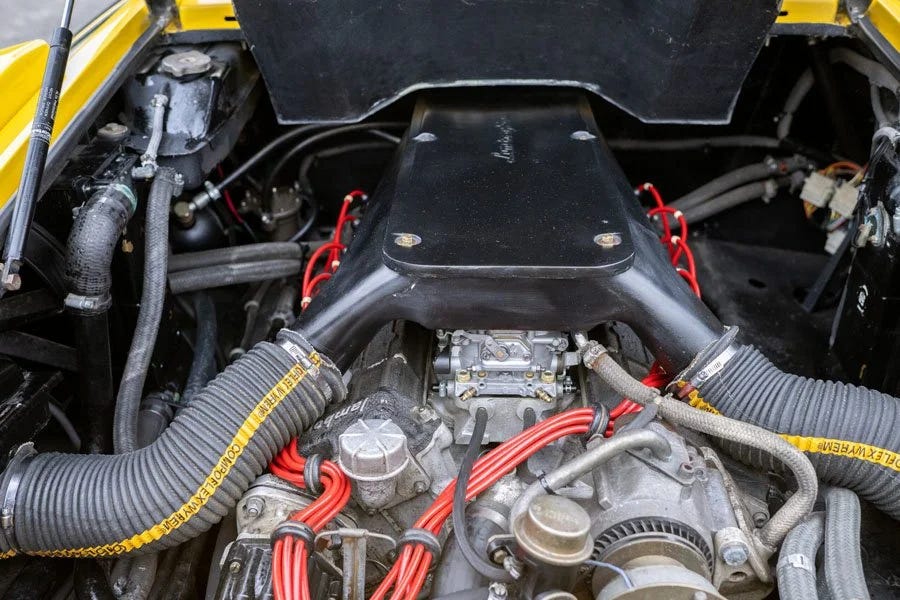
The Countach was not an easy car. That is part of its legend. The V12 sat longitudinally behind the cabin, while the gearbox was mounted ahead of the engine. A driveshaft then ran back through the sump area toward the differential. This helped packaging and weight distribution, but it also made the car mechanically complex.
The chassis used a tubular spaceframe, clothed mostly in aluminium panels. Later versions incorporated composite materials in some panels. The cabin was low and tight. The steering was heavy at parking speeds. The clutch was physical. The gearbox demanded patience. Rear visibility was poor in the LP400 and hopeless in the 5000 QV.
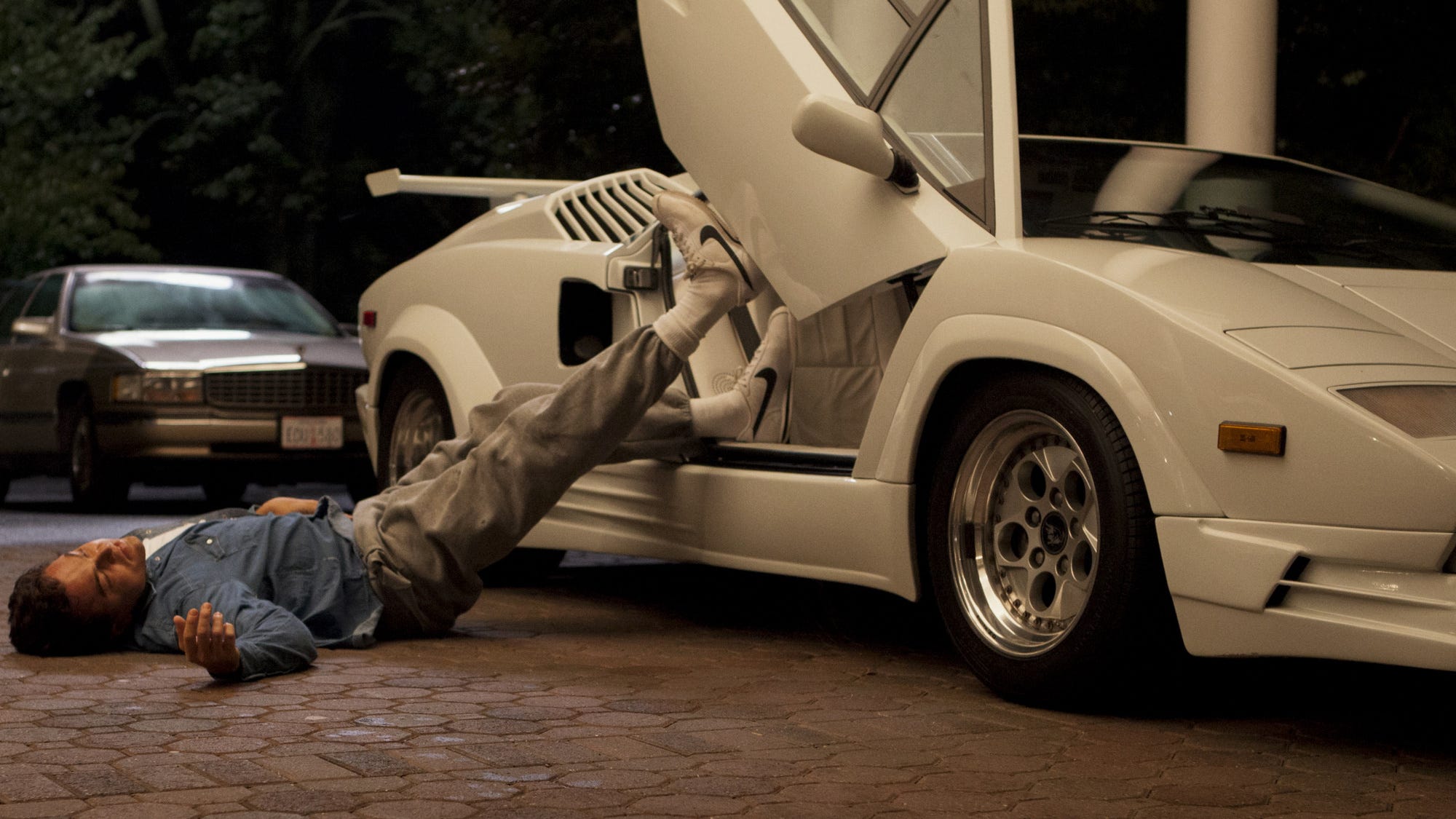
Then there was the famous Countach reversing technique: open the scissor door, sit on the sill, twist your body out of the car, and look backwards over the roofline.
Interior: Less Luxury, More Cockpit
The Countach interior was not luxurious in the modern sense. It was cramped, angular, hot, noisy, and not especially ergonomic. But it felt special because everything about it reminded you that you were inside something extreme.
The windscreen was close, the dashboard was low and wide, the driving position was offset, and the transmission tunnel dominated the cabin. Later cars became more trimmed and comfortable, but the Countach never became a grand tourer. It remained a supercar in the old sense: compromised, dramatic, and slightly unreasonable.


Variants Overview
Period-Correct Competitor Comparison
Why the Countach Beat Them Emotionally
On paper, the Porsche 959 was more advanced. The Ferrari Testarossa was more usable. The Aston Martin V8 Vantage was more muscular and gentlemanly. The BMW M1 was purer as a homologation machine. The Ferrari 512 BBi was the more elegant Italian rival. But none of them had the Countach’s shock value.
It did not just compete with other supercars; it changed what people expected a supercar to be. It made doors part of the drama. It made width part of the identity. It made impracticality desirable. It created the template for the modern Lamborghini flagship: outrageous shape, V12 engine, visual violence, and theatre before logic.
Without the Countach, the Diablo, Murciélago, Aventador and Revuelto would not have had the same cultural foundation.
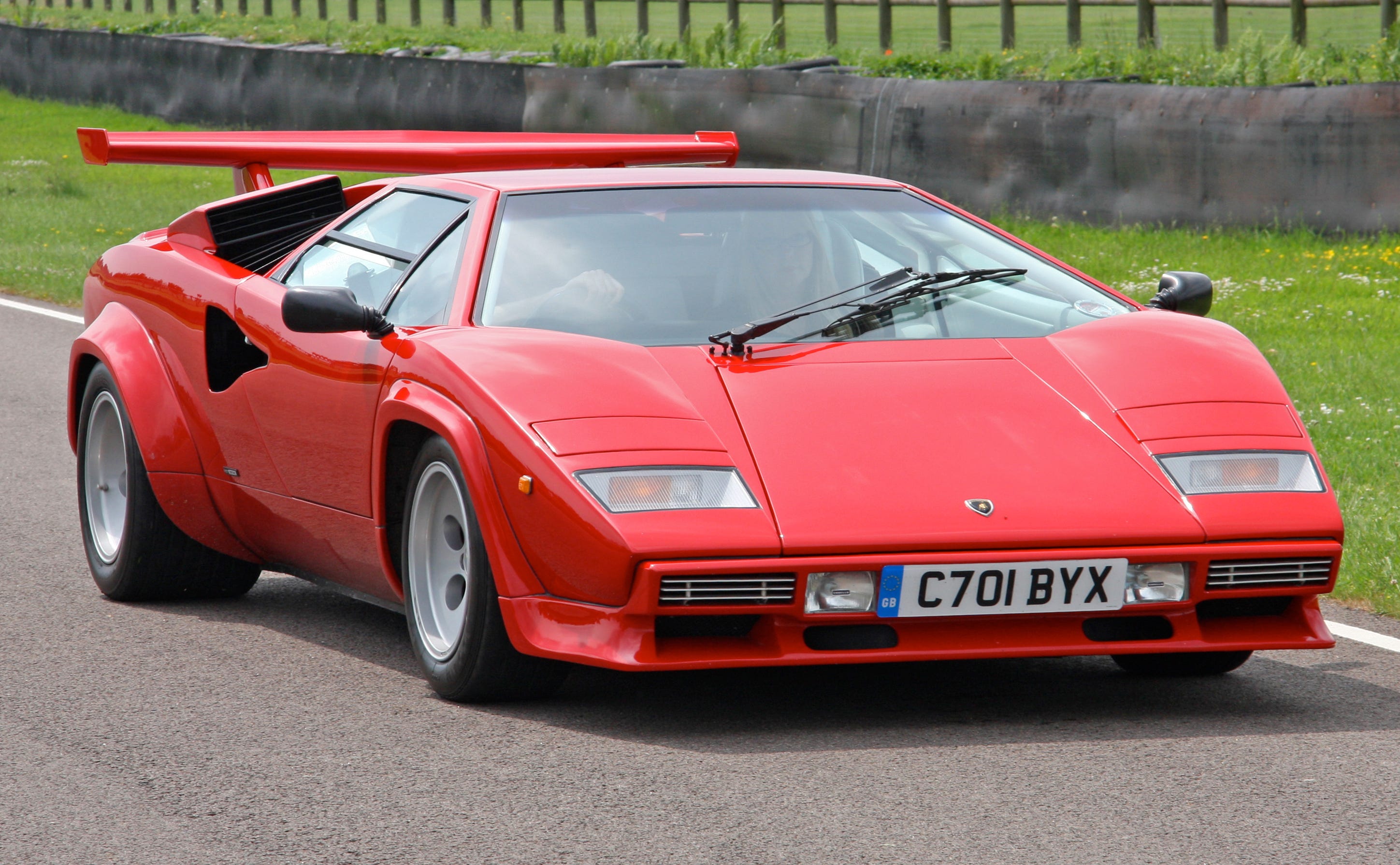
Market and Collectability
Today, the Countach market is split by taste.
The LP400 Periscopio is the connoisseur’s car: pure, rare, elegant, and closer to Gandini’s original vision. The 5000 QV is the enthusiast’s poster car: powerful, aggressive, and mechanically exciting. The 25th Anniversary is often the most usable and recognisable of the late cars, though some purists find its styling too busy.
Wing or no wing is another debate. From a collector purity perspective, many prefer cars without added wings unless factory-correct or period-correct. From an emotional perspective, the wing is part of the dream. A wingless LP400 is architecture. A winged 5000 QV is theatre. Both are Countach. Both matter.
Verdict: The Supercar as an Event
The Lamborghini Countach is not great because it is perfect. It is great because it is unforgettable. The Countach turns every start-up, every fuel stop, every reverse manoeuvre, and every tunnel into an event.
The Miura may have invented the modern supercar.
But the Countach taught the world what a supercar should look like in a child’s imagination. And sometimes, that matters more than lap times.
My favorite car of all time! There is nothing like it!
Saw once, spectacular...